
 Photo illustration: Lindsey Bailey/Axios. Photo: Brandon Bell/Getty Images
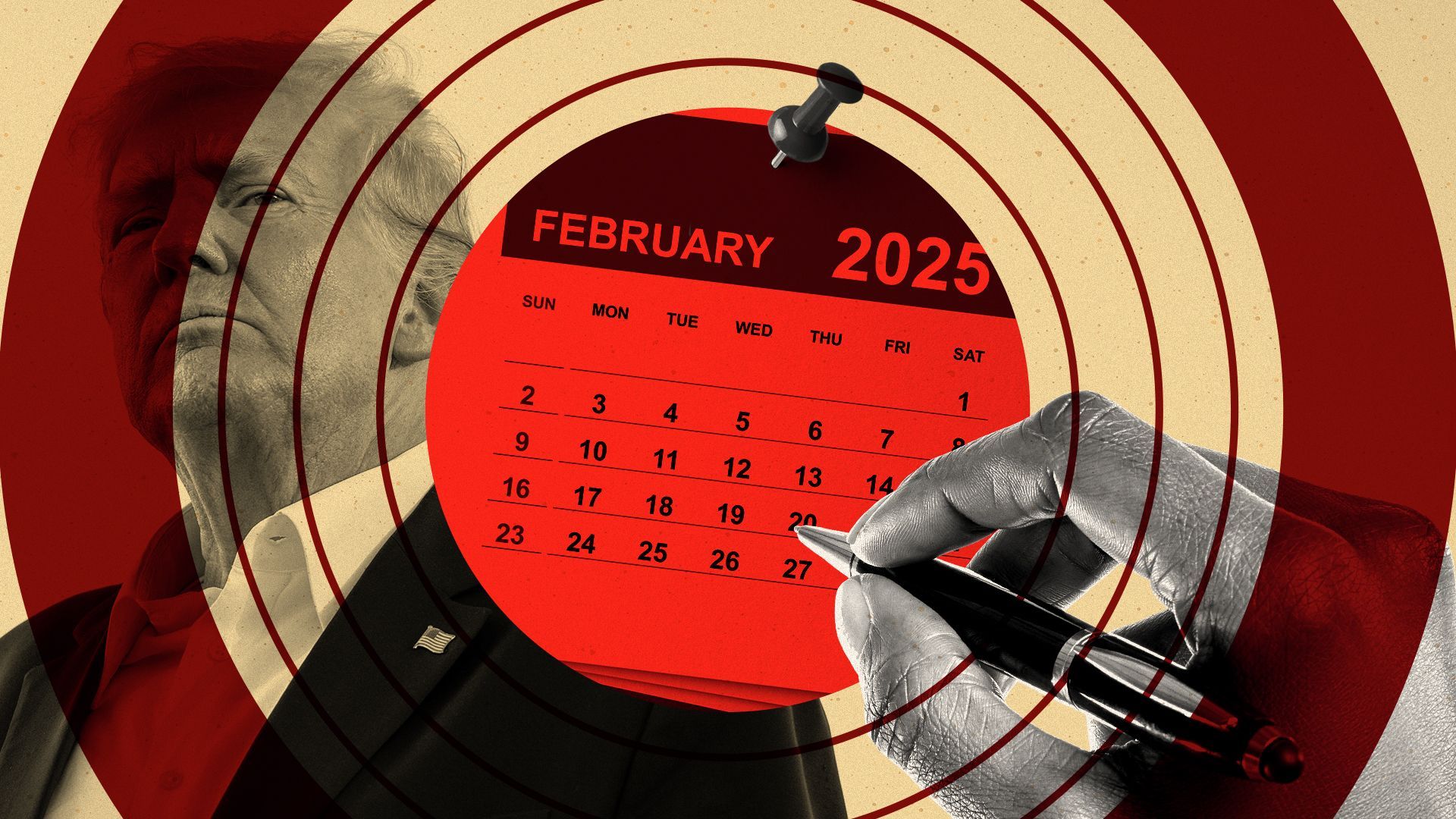
President Trump signed a proclamation recognizing Black History Month on Friday after earlier having gutted diversity, equity, and inclusion efforts and issuing federal guidance against heritage months.
Why it matters: Conservatives argue Black history lessons induce guilt, while critics of Trump’s agenda view the president’s work as an effort to erase hard truths.
State of play: In his first days back in office, President Trump dismantled federal DEI programs, halting efforts to bolster diversity and inclusion.

- The executive order ended programs to bolster diversity and inclusion on the federal level in schools.
- The orders also signal possible legal challenges to private sector diversity efforts, a move civil rights groups say could dismantle decades of progress.
- Marc H. Morial, president of the National Urban League, called this an “assault on the Civil Rights Movement” and led discussions on a legal response.
When asked about reports that the Defense Intelligence Agency discouraged Black History Month programming to align with Trump’s views on DEI, press secretary Karoline Leavitt noted the president’s planned recognition of Black History Month in a proclamation.
- The proclamation released Friday touts the achievements of American heroes Frederick Douglass, Harriet Tubman, Thomas Sowell, Justice Clarence Thomas and Tiger Woods.
Context: President Gerald Ford first acknowledged Black History Month on February 10, 1976 and every president since has issued a similar proclamation.
- Next year will be the 50th anniversary of Ford’s proclamation.
Friction point: What some see as an effort to erase “wokeness” and diversity efforts (DEI), is a battle over how America accepts, acknowledges or edits its past.
The push to erase Black history isn’t theoretical—it’s already happening.

Zoom in: Edmond W. Davis, a scholar of the Tuskegee Airmen, says their legacy should not be swept into DEI politics.
- “For the men and women of the Tuskegee Airmen, this isn’t DEI—it’s plain old history. Military history. American history,” Davis said.
- He argues their contributions stretch beyond race: “We focus heavily on African Americans, but there were also women, Latinos—the first wave of civil rights pioneers before MLK and Rosa Parks even got up. They were fighting.”
Zoom out: Some historians argue Black history is being framed as controversial, much like the fight over critical race theory. Attempts to minimize it distort historical truths, skew public understanding, and turn facts into political weapons, they argue.
Martha S. Jones, a history professor at the Stavros Niarchos Foundation Agora Institute at Johns Hopkins University, argues that although DEI restrictions, anti-wokeness, book bans, and curriculum limitations restrict access, history cannot be erased.
- “As heinous as book bans are, they’re not making history disappear,” she says. “The fight over history has always existed, but so has the resistance.”
Jones highlights Carter G. Woodson, who created Negro History Week in 1926, decades before Ford’s proclamation and its expansion to Black History Month—not due to wide acceptance, but because history was suppressed.

- Black History Month was not a government gift; it was a hard-won effort by Woodson during Jim Crow.
- “Woodson didn’t wait for permission,” Jones said. “He established institutions, authored books, and ensured Black history was told despite barriers.”
The bottom line: Jones said it is important to remember that “no one gave us permission” to have Black history.
- “I don’t want to be cheeky, but I have news for folks who imagine they can declare Black History Month done,” she said. “Black folks have been told that before, and we have persisted. We will persist. We will continue to know our history, research our history, teach our history, capture our history, and celebrate our history.”
- “It doesn’t live in the White House. It lives in us.”